- Melbourne, Australia
- (610) 413 812 477
- info@masterjiexu.com.au
FOLLOW US:


Imagine touching skin that has been sunburnt. Even the lightest contact can feel uncomfortable because the tissues underneath have become more sensitive.
A similar process can happen when nerves are irritated.
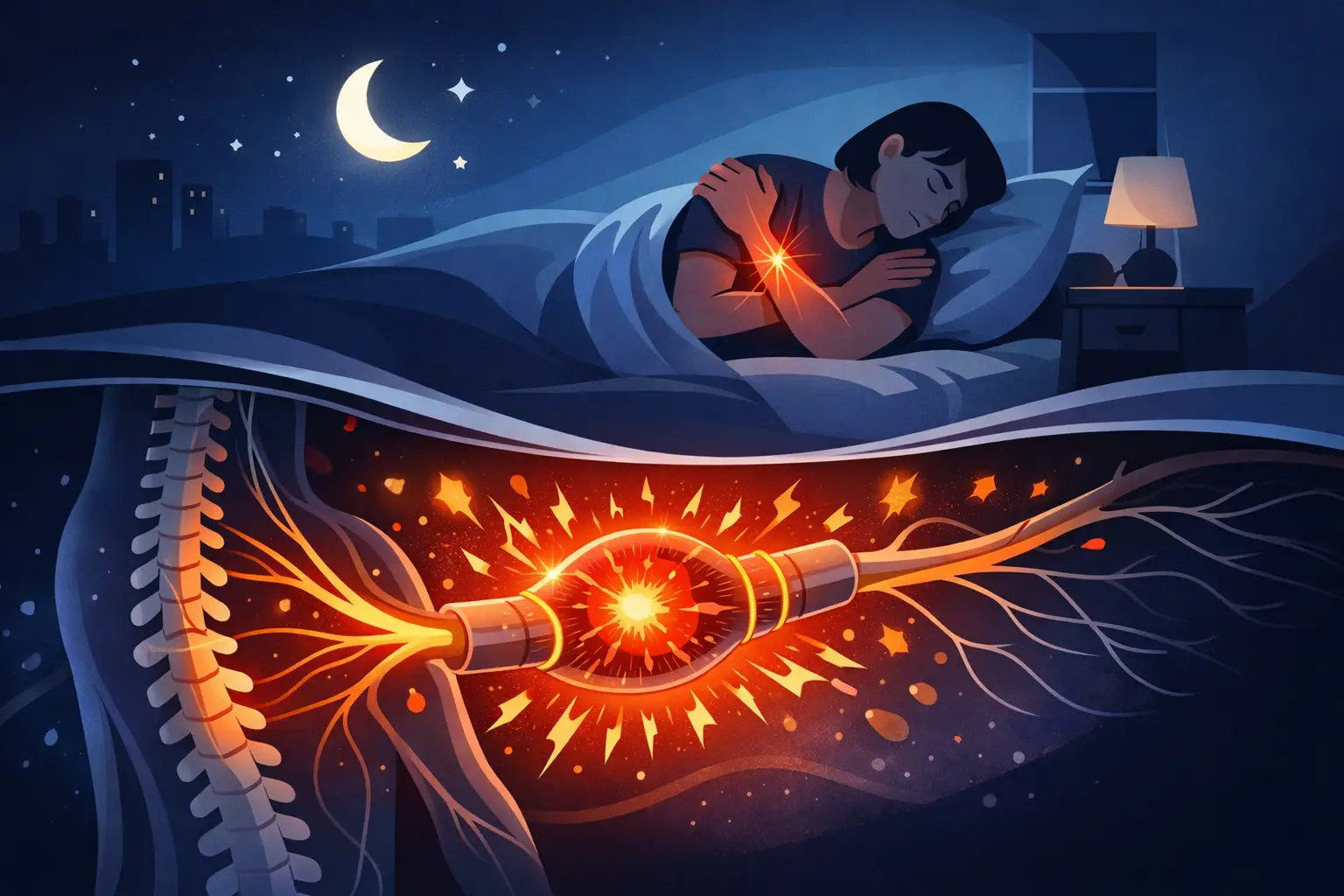
Although inflammation is a natural part of the body’s healing response, persistent or ongoing inflammation can make nearby nerves more reactive. As a result, sensations that would normally be ignored—such as light pressure from a blanket, changes in temperature, or remaining in one position—may feel surprisingly uncomfortable.
Many people notice that their symptoms seem manageable while they are busy during the day, yet become much more noticeable once they stop moving. Gentle movement throughout the day helps keep joints mobile, muscles active and circulation flowing. When the body becomes still for several hours, stiffness may increase, tissues can tighten, and irritated nerves may become more sensitive. This doesn’t necessarily mean your body is getting worse overnight. Often, it means your body is revealing patterns that were less obvious while you were active.
Understanding this distinction is important because it shifts the question from: “Why is my body failing me?” to “What conditions are making my nerves more sensitive?” That change in perspective is often the beginning of a more constructive approach.
________________________________________
Many people think of stress as something that only affects the mind. In reality, your nervous system experiences stress in many different forms.
A busy work schedule. Poor sleep. Emotional pressure. Financial concerns. Long hours sitting at a desk. Recovering from illness. Even trying to “push through” persistent pain every day. Your body doesn’t always distinguish between these different challenges.
Instead, they accumulate over time. When your nervous system remains under pressure for long periods, it can become more alert and more protective.
In this heightened state — often described as nerve pain without visible damage — pain signals may be amplified, and it can become harder for your body to fully relax at night. This is one reason some people describe feeling exhausted but unable to settle.
Their body is tired, yet their nervous system is still behaving as though it needs to stay on guard. From a holistic perspective, helping the nervous system feel safe again can be just as important as addressing the physical area where the pain is felt.
________________________________________
“One pattern I often observe is that people become frustrated because they can’t identify a single cause for their symptoms. They ask, ‘Was it my chair? Was it stress? Was it my posture?’
In many cases, it isn’t just one thing. The body has remarkable capacity to adapt, but when several small stresses accumulate over months or years, the nervous system may eventually begin expressing that burden through pain or heightened sensitivity. Rather than searching for one single explanation, I encourage people to look at the overall pattern. That wider perspective often provides far more useful insights than focusing on one isolated symptom.”