- Melbourne, Australia
- (610) 413 812 477
- info@masterjiexu.com.au
FOLLOW US:


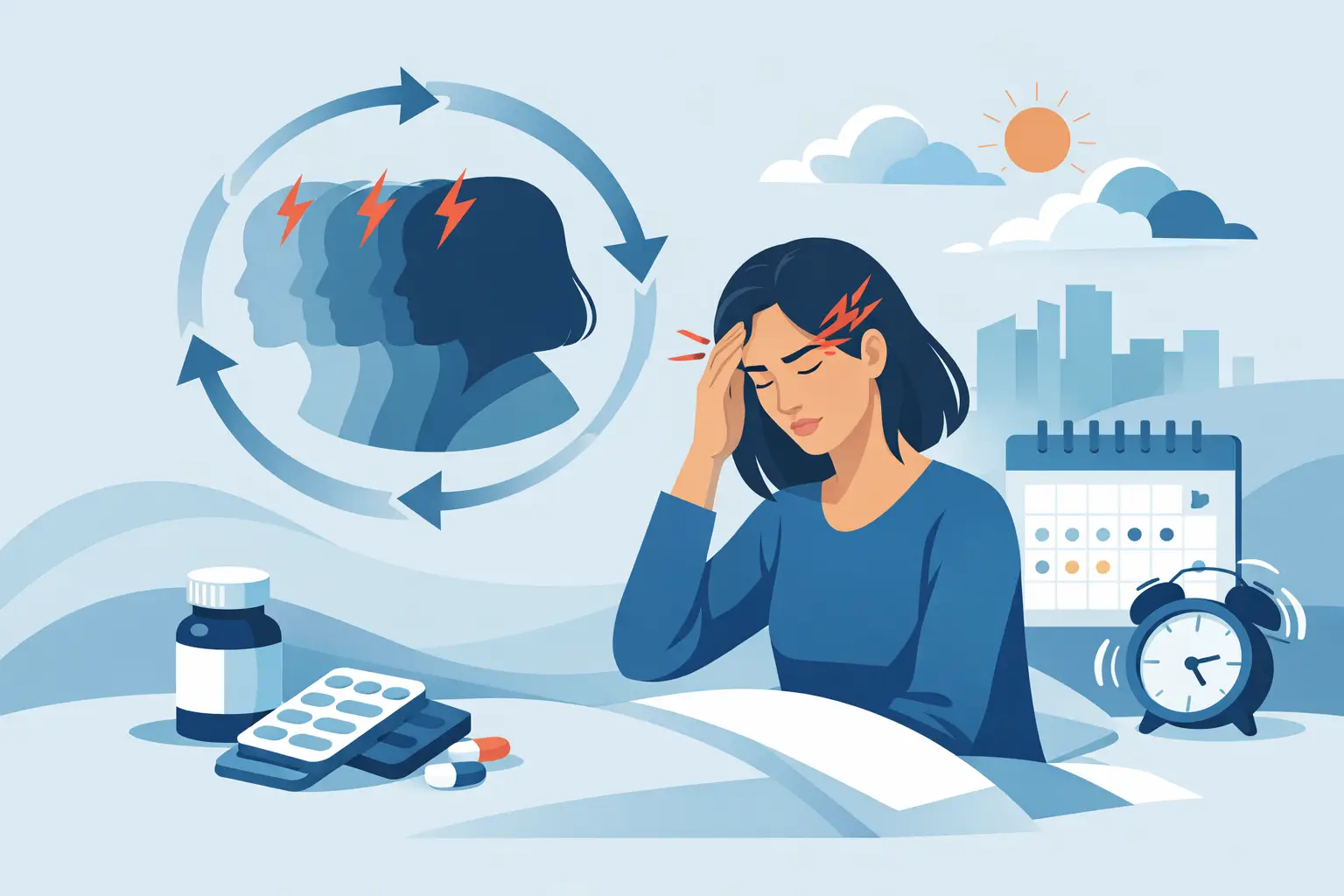
A headache that returns every week, every afternoon, or whenever life becomes demanding can feel frustrating—and sometimes confusing.
You may find yourself asking:
Why do my headaches keep coming back?
The answer is not always as simple as one stressful day or one poor night’s sleep.
Migraines that keep returning can be influenced by many different factors, including stress, sleep quality, hydration, eating patterns, caffeine, muscle tension, posture, hormonal changes and other underlying health conditions. For some people, several small pressures may combine to create a pattern that repeats again and again.
Pain relief may help you manage an episode. But when headaches continue returning, it can also be useful to step back and look at the bigger picture.
When do your headaches appear? What happens beforehand? What makes them better or worse?
These patterns can provide valuable information.
Important: Recurring headaches can have many possible causes. This article is for general education and does not diagnose or treat headaches. If your headaches are frequent, changing, severe or affecting your daily life, appropriate medical assessment is important.
Headaches are not all the same.
Some feel like a tight band around the head. Others throb or pulse, sometimes predominantly on one side. Some occur with nausea or sensitivity to light and sound, while others are accompanied by neck, jaw or shoulder tension.
The pattern matters.
When the headache begins, where you feel it, what happened beforehand, how long it lasts and what helps it settle can all provide useful clues.
For many people, recurring headaches are influenced by more than one factor.
A long day looking down at a laptop.
Rushed or missed meals.
Not drinking enough water.
Poor-quality sleep.
Long periods of sitting.
Jaw clenching.
Changes in caffeine intake.
Emotional or physical stress.
Sometimes these factors overlap.
You may sleep poorly because you are stressed, drink more coffee because you are tired, spend longer at your computer because you are trying to catch up, and develop more neck and shoulder tension as the day progresses.
By afternoon, the headache arrives.
The question then becomes:
Which factor caused it?
Sometimes, there isn’t one single answer.
Instead, the more useful question may be:
What pattern keeps making my body more vulnerable to headaches?
Stress isn’t only a busy calendar.
It can also be the feeling of being constantly “on”—rushing from one responsibility to another, anticipating problems, holding tension in your body or feeling that there is never enough time to stop.
When you experience ongoing stress, muscles around the neck, shoulders, scalp and jaw may become tense. For some people, this can contribute to chronic tension headaches.
You may notice that your headaches appear:
towards the end of a demanding workday after difficult conversations during particularly stressful periods when you have been working without breaks after several days of poor sleep and high workload
The body can continue carrying physical tension even after the stressful event itself has passed.
A simple starting point is to create small pauses before tension becomes overwhelming.
Take three slow breaths while consciously relaxing your jaw.
Stand up and walk for a few minutes.
Step outside without your phone.
Gently move your neck and shoulders.
These actions may seem small, but regular pauses can help interrupt the cycle of prolonged tension and inactivity.
Eight hours in bed does not necessarily mean eight hours of restorative sleep.
Your sleep can be affected by many things, including:
irregular sleeping times frequent waking alcohol late-night screen use stress or an active mind jaw clenching or teeth grinding uncomfortable sleeping positions snoring or other sleep-related problems
If you frequently wake with headaches, it is worth paying attention to the quality of your sleep rather than looking only at the number of hours you spent in bed.
Try observing your sleep for two weeks.
Record your bedtime, wake time, caffeine intake, alcohol consumption, screen use and how you feel when you wake.
You may begin to notice connections that were previously invisible.
A consistent wind-down routine can also help. Lowering the lights, reducing stimulation and spending a few quiet minutes breathing slowly can give your body a clearer transition from activity to rest.
For some people, headaches become more likely when they skip meals, go for long periods without eating, become dehydrated or change their usual caffeine intake.
This doesn’t mean that everyone needs a strict diet or that one particular food is responsible for their headaches.
Instead, look for your own pattern.
Does your headache tend to appear after you have:
skipped breakfast? gone several hours without eating? had several coffees? suddenly reduced your usual caffeine intake? been too busy to drink enough water?
If you decide to reduce caffeine, gradual reduction may be more comfortable than stopping suddenly, as abrupt caffeine withdrawal can itself cause headaches.
The goal isn’t perfection.
It is greater consistency.
Regular meals, adequate hydration and a thoughtful approach to caffeine may help some people reduce factors that contribute to recurring headaches.
Modern work and lifestyle habits can place considerable demand on the neck, shoulders and jaw.
Hours at a computer.
Long periods driving.
Looking down at a phone.
Holding the same posture for extended periods.
Clenching your jaw while concentrating.
These patterns can contribute to muscle tension and discomfort around the head and neck.
Take a moment to observe yourself while working.
Are your shoulders gradually moving towards your ears?
Are you leaning towards the screen?
Do you hold your head in the same position for hours?
Do you clench your teeth when concentrating?
Do you wake with a sore or tired jaw?
Instead of trying to force a deep stretch, start with something simpler:
Change position regularly.
Stand up.
Walk.
Relax your shoulders.
Move gently.
Give your eyes a break from the screen.
Small changes repeated throughout the day can be more sustainable than one intense stretching session at night.
For some women, headache patterns can change around menstruation, perimenopause, pregnancy or other hormonal shifts.
If you notice a recurring relationship between your headaches and your menstrual cycle, keeping a symptom diary can help reveal the pattern.
Record:
when the headache occurs where you feel it how severe it is your sleep quality food and hydration stress levels your menstrual cycle, if relevant anything that makes the headache better or worse
This information can also make conversations with your GP or another qualified health professional more useful.
Hormonal changes are only one possible influence. Sleep, stress, eating patterns and workload may also change at the same time.
This is another reason why looking at the whole pattern can be more informative than focusing on one factor in isolation.
This is an area that needs to be approached carefully.
Not every headache is caused by emotions, and headache pain should never simply be dismissed as “stress” or “all in your head.”
At the same time, emotional and psychological stress can affect the body.
When you are carrying grief, worry, frustration, responsibility or prolonged emotional pressure, you may sleep differently, breathe differently, tense your muscles or find it harder to switch off.
These physical responses can become part of the overall pattern.
A holistic approach therefore asks questions such as:
What have you been carrying lately?
When do your headaches become more noticeable?
What happens in your body when you are under pressure?
Do you have enough opportunities to rest and recover?
The purpose isn’t to blame yourself for your headache.
It is to become more aware of the relationship between your physical state, nervous system, daily habits and emotional wellbeing.
“When someone tells me that their headaches keep returning, I don’t want to look only at the place where they feel the pain. I want to understand the pattern around it.
What was happening in their life before the headache appeared? How were they sleeping? How much physical and emotional pressure were they carrying? How were they using their body throughout the day?
I’ve found that people often become very good at managing their symptoms while becoming disconnected from the signals that came before them. They take something when the headache appears, continue working, and move on. But if the same pattern keeps returning, the symptom may be giving us an opportunity to pause and look more closely.
I don’t believe every headache has one hidden cause, and I would never suggest that people ignore appropriate medical assessment. My approach is simply to look at the person as a whole. The location of the pain is important—but so is the story surrounding it.”