- Melbourne, Australia
- (610) 413 812 477
- info@masterjiexu.com.au
FOLLOW US:


Most people hear about these two practices from a friend, and the names tend to blur together. Both talk about life energy. Both take place in a calm, quiet room. Still, the roots are very different. In this blog, we explain how Reiki and Chinese energy healing compare, and which one may suit your needs.
Reiki began in Japan in the early 1920s. Mikao Usui developed it as a spiritual practice centered on relaxation and personal balance.
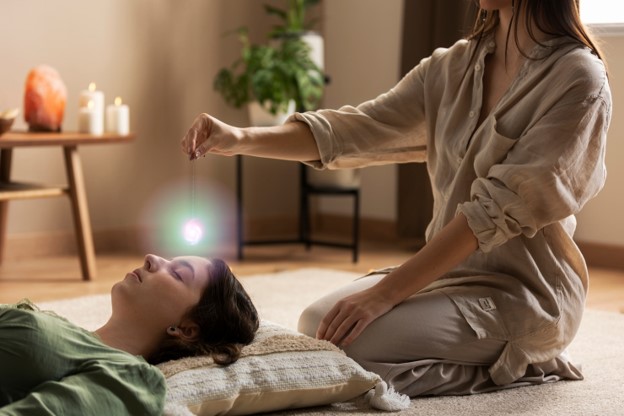
The name joins two Japanese words, often translated as universal and life energy. A practitioner rests their hands lightly on the body, or just above it. The intention is to direct that energy toward the receiver.
Core Features of Reiki
Chinese energy healing draws on traditions that stretch back thousands of years. It sits inside the wider framework of Chinese philosophy, where vital energy is called Qi, or Chi.
In this view, Qi travels along channels known as meridians. Good health depends on a smooth, balanced flow. A blockage or weakness in one place may show up as discomfort somewhere else.
Related practices include Qigong, Tai Chi and acupressure. Yin and Yang, the paired forces of rest and activity, guide much of the thinking.
Both belong under the wider banner of energy healing. That term covers any practice built on the belief that the body holds a flow of vital energy, and that this flow can be supported.
The overlap ends there. Each tradition has its own history, vocabulary and methods. Treating them as identical is a bit like saying a piano and a violin are the same because both make music.
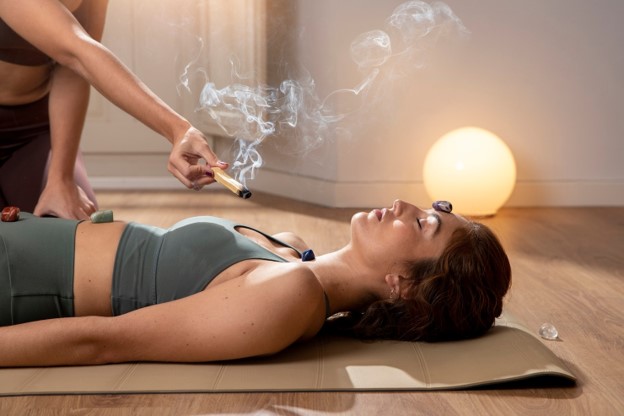
Core Features of Chinese Energy Healing
Origin and Philosophy
Reiki is a modern Japanese practice, less than a century old. Chinese methods rest on classical texts and a long record of observation. One is a single system. The other is a broad family of related approaches.
Method and Technique
Reiki relies on light touch and a fixed pattern. Energy healing in the Chinese tradition is more adaptive. The practitioner studies how energy moves through the meridians, then works on the areas that seem restricted.
Practitioner Training
A beginner can start learning Reiki within a weekend, and further levels follow. Chinese methods usually take years of study. They involve meridian theory, assessment skills and movement arts, all of which need steady practice.
Client Involvement
Reiki is mostly receptive. You lie down and rest. In the Chinese tradition, clients are often taught breathing exercises or gentle movements for daily use. That ongoing role is one of the clearest contrasts between the two.
A Typical Reiki Session
You lie down fully clothed. The practitioner moves through a series of hand positions, often for 30 to 60 minutes. The room is quiet, and conversation is kept to a minimum.
A session often opens with questions about sleep, stress, digestion and routine. The practitioner may observe posture and breathing. Energy work follows, aimed at the areas that appear restricted. Afterward, you receive a summary of what was noticed.
Simple Tips Before You Book
Which One Fits Your Situation
The right choice depends on what you want from the experience. Consider these points:
Neither practice replaces medical care. Both are best used alongside it, and any persistent symptom deserves a proper check with a doctor first.
How to Choose a Practitioner
Skill and honesty matter more than any label. Look for the following:
Many people expect dramatic results after one visit, and that expectation causes most of the disappointment. Energy healing works gradually, and its effects are often subtle at first, such as deeper sleep or a lighter mood. Another myth is that belief alone decides the outcome. In practice, regular habits matter just as much. A third is that these methods compete with medicine. They do not. Chinese energy healing, in particular, is meant to sit alongside professional care, adding attention to rest, breath and daily routine.
Reiki offers gentle, receptive rest. Chinese methods offer a broader system, with assessment, movement and long-term habits at its center. Both can have a place in a thoughtful wellbeing routine.
At Master Jie Energy Healing in Port Melbourne, we work within the Chinese tradition and focus on the whole person. If you would like to understand your own patterns, our Personal Health Consultation is available online via Zoom or by photo reading. Reach out through our contact page, and we will guide you toward a clear first step.
Is Reiki the same as Chinese energy healing?
No. Reiki is a Japanese practice built around light hand placement and a set sequence. Chinese energy healing comes from a much older system based on Qi, meridians and whole-body balance. The methods, training and session style all differ.
Does energy healing have scientific support?
Research is mixed. Some studies suggest that energy healing may support relaxation and a sense of wellbeing. Evidence for treating specific medical conditions is limited. For that reason, we describe it as a complementary option, never a substitute for medical advice.
How many sessions might I need?
It varies from person to person. Some people feel calmer after a single visit. Others with long-standing concerns book a series over several weeks. A practitioner can suggest a sensible schedule once they understand your situation.
Can I try both Reiki and Chinese energy healing?
Yes, many people do. The two are not in competition. Let each practitioner know about any other approaches you use, so they can tailor their work to you.